THE JOURNAL · E20
E20 petrol and used luxury cars in India: what to check before you buy
A fuel label, a model year and a headline can tell different stories. Here is how to establish what applies to the car you are considering.
Reviewed by Prithvi · 12 September 2026
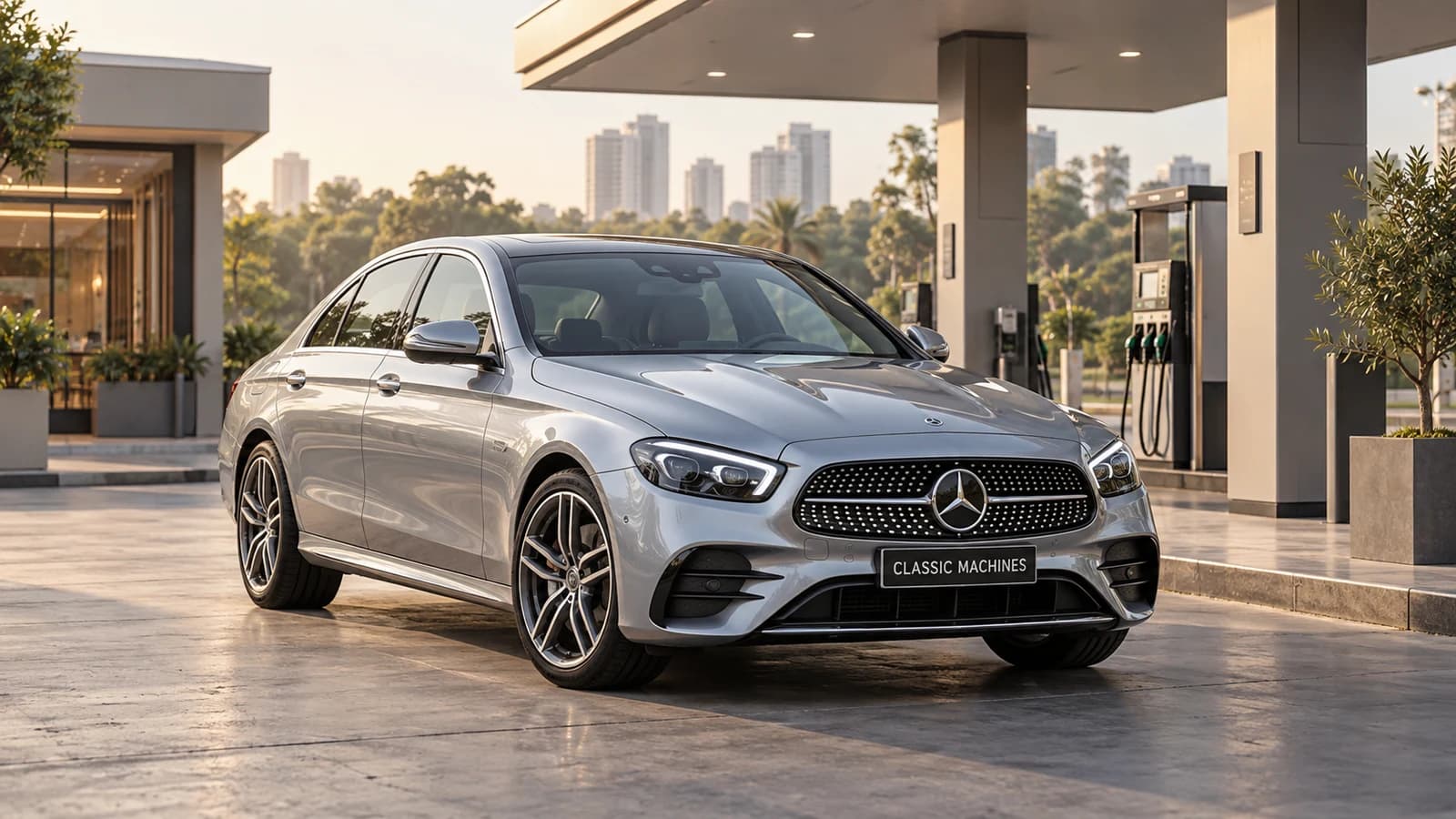
The fuel flap says 95 RON. The pump says E20. Before buying the car, you want to know whether those two labels belong together.
You cannot settle that by comparing the numbers. They describe different things. Nor can the registration year, on its own, tell you what fuel the manufacturer permits for this particular engine.
There is a document to find and a question to put in writing. It is worth doing before the deposit, while you can still make the answer a condition of proceeding.
Two questions hidden inside one fuel label
E20 describes petrol blended with 20 per cent ethanol. An octane rating describes a different property: resistance to knocking. IndianOil identifies XP95 as 95 RON petrol. That number does not, by itself, tell you the ethanol percentage. IndianOil's XP95 information explains the octane specification.
For a used performance car, write down both requirements. A recommendation for 95 RON is not permission to ignore an ethanol limit; an ethanol-compatible engine still needs the specified octane. Ask the fuel retailer about the blend being dispensed rather than inferring it from the word “premium”.
What the official position tells us
In its 30 July 2026 statement, the Ministry of Petroleum and Natural Gas says testing supports E20 use under prescribed standards and reports no verified evidence of widespread engine failures attributable to ethanol blending. It also describes manufacturers continuing to honour warranty obligations.
That is the government's assessment of the rollout. It is not an inspection report for the five-year-old car in front of you, or an individual warranty decision.
The earlier NITI Aayog roadmap, published in June 2021, separated changes to fuel-contact materials from engine calibration for E20. It is useful technical background, but its proposals should not be presented as today's pump-availability rules. Read older documents with their dates attached.
The question to send with the VIN
A badge and registration year are an incomplete description. Establish the model year, engine, variant, build date and whether the car was supplied for India. A car first registered in January may have been built the previous year. An overseas manual may cover a different specification.
Photograph the fuel flap and find the relevant section in the correct owner's manual. Save the edition or document reference. Then ask the manufacturer's India customer-care team or an authorised workshop to confirm the current guidance against the VIN.
The request can be quite short:
Please confirm the permitted ethanol blend and required octane for this VIN, any applicable service guidance, and the effect on the vehicle's remaining warranty. The attached manual states the following fuel specification.
Share the VIN privately with the manufacturer; there is no reason to post the registration certificate in a public comment thread. Keep the written response with the service history. If the answer is generic, ask whether it covers this engine and model year. If it contradicts the manual, ask for the current written instruction that supersedes it.
Until that conflict is resolved, we would leave the fuel question open. A blanket cut-off year leaves too much unexplained: the engine, market specification, materials and the manufacturer's current instruction. Ask about the car you might buy.
Compatibility and condition need separate evidence
A permitted fuel blend does not tell you whether an ageing car has a leak, an unresolved warning or an undocumented modification. Equally, a fault appearing after a fill does not establish what caused it.
Before purchase, ask a qualified workshop to inspect the accessible fuel system, review fault records and investigate any starting, idling or drivability complaint. Obtain invoices for replaced parts and ask why the work was required. A modified car needs particular care: factory advice may not describe the tune or hardware currently fitted.
Avoid diagnosing a car from a photograph of a hose or a single dashboard warning. Nor would we treat an additive bottle as proof that an incompatible system has been converted. Any proposed treatment or modification needs written technical support for the actual vehicle.
Make the running-cost question measurable
There is no honest mileage-loss figure we can apply to every used luxury car. Route, traffic, driving style and the car's condition complicate a comparison. A single trip-computer reading is a poor basis for a purchase decision.
If you already own the car, retain fuel receipts and compare several similar journeys or full-tank intervals. Record distance, litres, fuel grade and the route. Bring an unexplained change to the workshop with that record; do not assume the diagnosis in advance.
For a purchase, test the budget with a less favourable consumption assumption. An illustrative 1,000 km month costs ₹10,000 at 10 km/l and ₹100/litre, or about ₹11,111 at 9 km/l. These are invented planning inputs, not today's fuel price, a GLE consumption claim or a prediction of E20's effect. The calculation simply shows what a change would mean to your budget.
The checklist to take to a viewing
- Record the exact engine, model year, build details and market specification.
- Read the ethanol and octane instructions in the matching manual.
- Photograph the fuel label and resolve any conflict in writing with the manufacturer.
- Check the remaining warranty and relevant service instructions for that vehicle.
- Investigate faults and modifications through workshop records and inspection.
- Keep the answer in the ownership file so the next owner can understand it too.
Before you pay the deposit
If the manual and the seller give different answers, keep the deposit in your account while you resolve the difference. Ask for the manufacturer's response against the particular car, then keep it with the service records. A reassuring conversation is not a substitute for that document.
If the question has widened into whether you want a petrol car at all, read Petrol, hybrid or electric: choosing a luxury car for your life in India. It starts with your parking and journeys, then works towards a shortlist.
You can also browse the current collection, or start a Private Search with the model and year you have in mind. Bring the fuel question into the conversation at the beginning. It deserves an answer before a showroom visit becomes a buying decision.
Sources & review notes
Sources checked 5 September 2026. Manufacturer guidance, tariffs and conditions can change. Confirm the details for the actual vehicle before a purchase.
EXPLORE THE COLLECTION
Put the questions to a particular car.
Selected by fuel type or model relevance—not a compatibility recommendation. Confirm the specification, condition and suitability of each car.


YOUR NEXT CAR
Bring the question. We can start there.
Explore what is here, or tell us what you need through Find My Car. Your parking, journeys and budget give the conversation a useful starting point.